
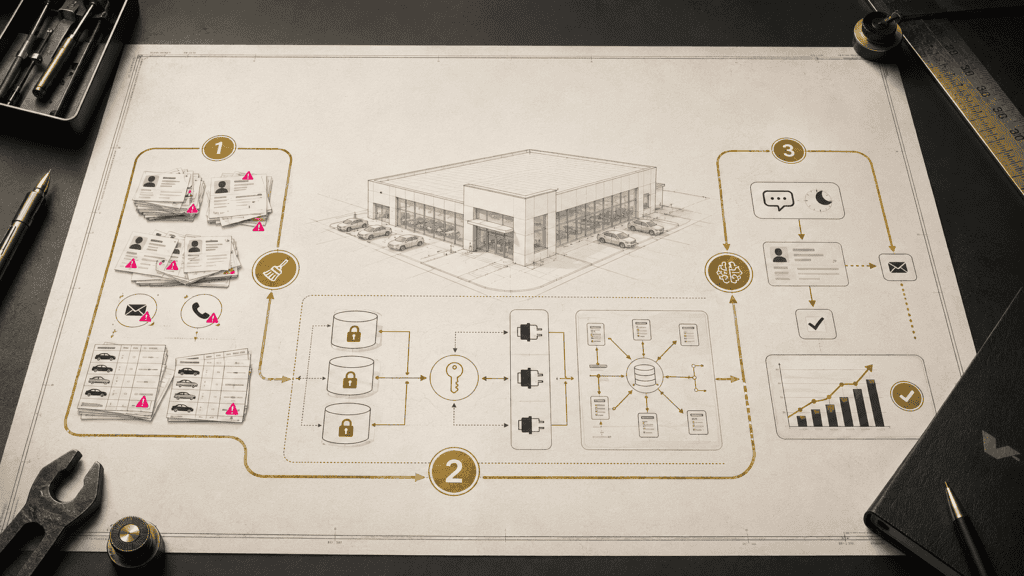
Most dealers know AI is coming for their business. Fewer know where to start. The instinct is to buy a tool and hope it does something, which usually ends in a subscription nobody uses. A better approach is a simple 90-day plan that builds the foundation first, so whatever AI you adopt later actually works. Here is how to spend those three months.
Days 1 to 30: Clean Your Data First
AI is only as good as the data underneath it. Before you evaluate a single vendor, spend the first month getting your house in order. Where does your inventory data live? Is your CRM data accurate, or full of duplicate and dead records? Is your sales history complete and consistent?
This is unglamorous work, and it is the highest-leverage thing you can do. A clean, complete dataset makes every future AI project easier and more accurate. A messy one guarantees that even the best tool produces confident nonsense. Assign someone to audit your core systems and fix the obvious problems this month. A practical starting point is your CRM: pull a list of records with no phone number or a dead email, merge the obvious duplicates where the same customer exists three times, and standardize how the basics are entered. If an AI later tries to follow up on leads and half the contact details are wrong, it fails for a reason that has nothing to do with the AI.
Days 31 to 60: Own the Context
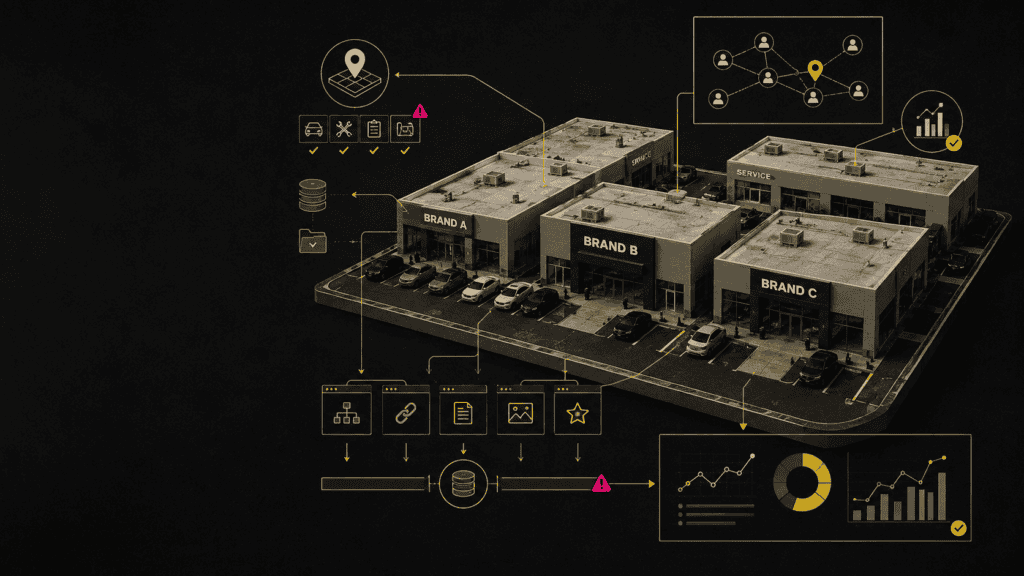
With cleaner data in hand, the second month is about control. Ask a blunt question about every system you use: if we switched vendors tomorrow, do we keep our data and the intelligence built on it, or does it walk out the door?
The goal is to set up so your shopper history, inventory, and interaction data stay yours. Open standards like the Model Context Protocol make this practical by letting AI tools connect to data sources you control instead of locking everything inside one platform. Getting this right now means every tool you add later builds on an asset you own rather than one you rent. Make a simple map of where your important data lives and who holds the keys to each system. It is common to find that your richest customer history sits inside a vendor platform you cannot fully export, and finding that now, before you build more on top of it, is far cheaper than finding it the day you try to leave.
Days 61 to 90: Pick One Use Case
Now, and only now, choose a single, concrete use case. Not a platform-wide transformation. One problem worth solving. Maybe it is aging used inventory, or slow lead follow-up, or answering common service questions after hours. Pick the one where a win is obvious and measurable.
Run it small. Set a clear metric before you start, give it a defined window, and judge it honestly. Say you pick after-hours service questions. Decide up front what success looks like, for example a set share of evening inquiries answered without a person, and a target for booked appointments from them. Give it a month, then look at the number and decide plainly whether it worked. One well-chosen use case that shows real results builds more momentum than five half-finished experiments. It also teaches your team what good looks like before you scale.
Why This Order Matters
The sequence is the whole point. Most failed AI efforts skip straight to buying a tool, which is step three, on top of messy data and rented context, which are steps one and two. The tool then underperforms, and everyone concludes AI does not work for dealers. The problem was not the AI. It was the missing foundation. A store that buys a slick lead-response bot before cleaning its CRM gets fast, confident replies sent to wrong numbers and stale leads, and blames the software for a problem it inherited from the data.
Clean data, owned context, one focused use case. In that order, ninety days is enough to go from no plan to a real, working start with something solid underneath it.
What Comes After
Once that first use case proves out, you expand from a position of strength. Your data is clean, your context is yours, and you have a template for evaluating what to do next. That is a far better place to be than a stack of unused subscriptions and no foundation to show for the spend.
Frequently asked questions
Do I really need a full 30 days on data before touching AI?
The point is order, not a rigid calendar. A smaller, cleaner store might get its data in shape in two weeks; a larger one with several disconnected systems may need longer. What matters is that you do the cleanup before you buy, because every dollar spent on a tool sitting on messy data is a dollar working against you.
Can I run these phases in parallel to move faster?
Some overlap is fine, but resist skipping ahead to the tool. Data cleanup and mapping who owns your context can run together, since both are about getting your house in order. The use case, though, should wait until those are far enough along that you are testing on clean, owned data, or you will not be able to tell whether a poor result came from the tool or the foundation.
What if I have already bought tools before doing any of this?
Start the sequence anyway, from where you are. Clean the data feeding your existing tools, check what you actually own and can export from each one, and then judge each tool against a single clear metric. You may find some are worth keeping and others are the unused subscriptions this plan is meant to prevent. It is never too late to put the foundation underneath what you already have.
This is the kind of capability you should own, not rent. See how VCTRS gives dealers AI built on context you own on our AI for car dealerships page.