
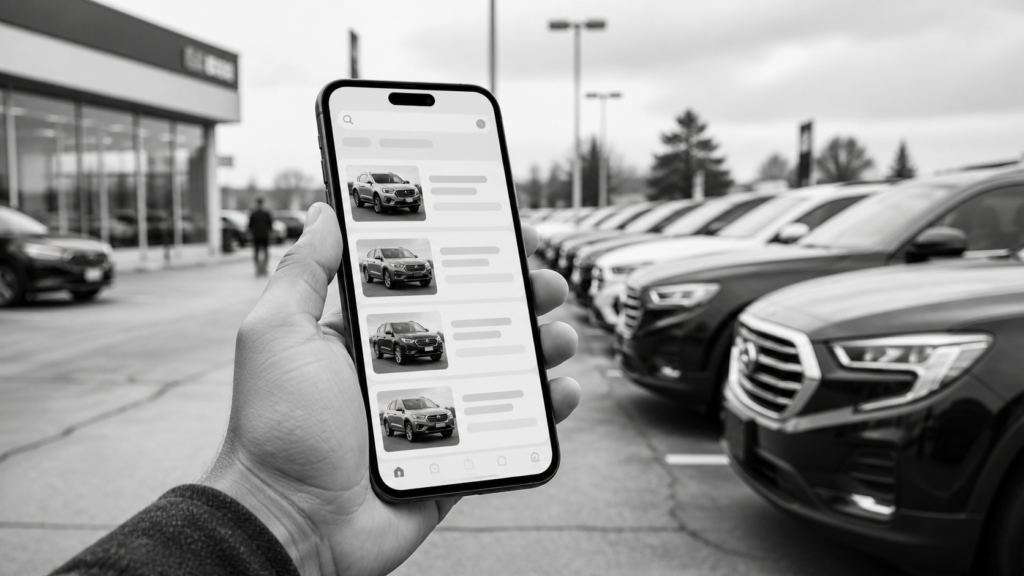
When a shopper searches for a used SUV in your area, Google can now show real vehicles from real dealers right in the results, with photos, price, and mileage. These are Google Vehicle Listings, and the organic placements cost nothing to appear in. For dealers, that is free inventory exposure in front of buyers who are already searching. Here is how it works and where it fits in your SEO.
What Google Vehicle Listings Are
Vehicle Listings pull your live inventory into Google Search using structured vehicle data. A shopper sees a visual card for each matching car, tied to a specific make, model, price, and location. Some placements are free and appear organically. Others are paid Vehicle Ads. The free listings are the ones every dealer should be capturing, because they put your actual cars in front of active shoppers without a media budget.
The reason this matters is where those shoppers would otherwise go. A buyer searching for a specific used crossover often heads straight to a third-party marketplace where your car sits in a row next to a dozen competitors and a monthly listing fee. Vehicle Listings give that same shopper a path to your inventory directly from Google, on a card that links to your site, not someone else’s platform. That is the difference between paying to stand in a crowd and showing up on your own.

How to Qualify
Getting your inventory eligible takes a few pieces working together:
- A Google Merchant Center account: This is where your vehicle inventory feed lives.
- A clean vehicle data feed: Each car needs accurate make, model, year, price, mileage, VIN, and images that match what is on your lot.
- Vehicle inventory setup: Your account has to be enrolled for the automotive vehicle listing program, not standard retail products.
- Consistent site data: The details on your vehicle detail pages should match the feed, so Google trusts what it sees.
The recurring theme is data quality. Wrong prices, missing photos, or sold units still showing as available will get listings suppressed fast. Picture a store that sells a truck on Friday but does not clear it from the feed until Monday. For that weekend, Google is showing a car that is gone, shoppers are asking about it, and the store looks careless. Multiply that across a busy month and the feed quietly loses Google’s trust, which is far harder to earn back than it was to lose.
Where It Fits in Dealer SEO
Vehicle Listings are not a replacement for SEO. They are an extension of it. Both depend on the same foundation: accurate, structured, well-maintained information about your inventory. A dealer with clean vehicle detail pages, correct structured data, and a reliable feed is set up to win in organic search and in Vehicle Listings at the same time.
Think of it as one more organic surface where your cars can show up. Your website earns rankings for model and city searches. Your listings earn placement on those visual inventory results. Together they widen the number of ways a shopper can find your specific cars before they ever hit a third-party marketplace. A store that keeps its detail pages tight, with real photos and honest prices, feeds both channels from the same effort rather than treating them as two separate projects. The work you already do to rank a vehicle page is most of the work that qualifies the same car for a listing.

Why Ownership Matters Here Too
The feed and the data behind these listings should be something you control. When your inventory data is clean, structured, and owned by your store, you can point it at Google, at your own site, and at any channel you choose. When it is locked inside a vendor system you do not control, you are once again renting access to your own inventory exposure.
The dealers who win with Vehicle Listings are the ones who treat inventory data as an owned asset and keep it accurate every single day. That discipline pays off across every organic channel at once, and you can measure it by the shoppers it sends to your lot. A store that owns its feed can fix a bad price in minutes and see the corrected card back in front of buyers, instead of filing a ticket and waiting on a vendor to get to it.
Frequently asked questions
Do Google Vehicle Listings really cost nothing?
The organic listings are free to appear in. There are also paid Vehicle Ads that work like other Google ads, but the free placements are the ones every dealer should be capturing first. The only real cost is the effort to keep your inventory feed clean and accurate.
How is this different from posting on a third-party marketplace?
A marketplace lists your car alongside your competitors on their platform and usually charges for the privilege. Vehicle Listings send shoppers from Google to your own site, where the relationship and the lead belong to you. One rents you space next to rivals. The other points buyers directly at your store.
How often should my inventory feed update?
Daily at a minimum, and closer to real time is better. The faster a sold unit drops off and a new arrival appears, the more Google trusts your feed and the fewer shoppers you disappoint with cars that are already gone. Feed freshness is one of the clearest signals of a well-run listing.
This is the kind of result you should own, not rent from a vendor. See how VCTRS builds dealer-owned SEO on our car dealership SEO page.